Redesigning your corporate website offers an exciting opportunity to reposition your brand and accelerate revenue. However, without a methodical strategy, a redesign can inadvertently damage existing search engine rankings, break high-converting funnels, and confuse loyal customers.
1. Audit Current Traffic and Top-Converting URLs
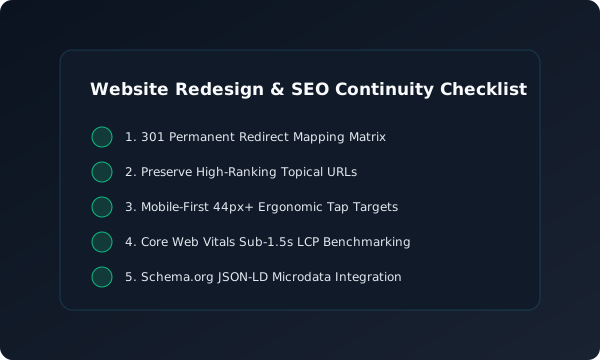
Before changing a single line of code, export your historical Google Search Console and Analytics data. Identify your top 20% URLs driving 80% of your organic search volume and leads. These pages must maintain their topical authority and exact or carefully 301-redirected URL structures.
2. Map Out a Strict 301 Redirect Matrix
Changing URL structures without 1-to-1 301 permanent redirects is the single fastest way to destroy domain authority. Create a comprehensive spreadsheet mapping old paths to their corresponding new URLs.
3. Prioritize Mobile-First Touch Interactions
Over 60% of B2B and consumer web traffic now originates on mobile devices. Design mobile navigation, lead capture forms, and button tap targets (minimum 44px) with thumb-friendly UX before expanding to desktop viewports.
4. Implement Robust Schema.org Structured Data
Ensure your new templates embed rich JSON-LD microdata for Organizations, Services, FAQs, and Articles to maximize rich snippets and AI search assistant discoverability.
5. Validate Speed and Core Web Vitals on Staging
Benchmark Largest Contentful Paint (LCP), Cumulative Layout Shift (CLS), and Interaction to Next Paint (INP) before pushing live to production hosting environments.